Friday, March 11, 2016

Good is Good Enough

I got good news from my oncologist on Tuesday. It wasn't great or miraculous news, but it was good. It wasn't what I was expecting though. I was looking forward to a break from chemo and surgery to remove the masses. When this journey started my oncologist recommended six months of chemo and then surgery. My surgeon wanted three months of chemo then surgery. I liked his plan better so that's what I was hoping for. But that is not what we are doing. My mother told me that I may have had my expectations too high. It's possible that's true, but I don't want to lower the bar here. I want to keep expecting great and possibly even miraculous results.  Instead I think I need to reframe my assessment of my progress.

Here is the data. I have a copy of my CT report comparing the pre-chemo CT to the 3-month treatment CT.  I read it. Then re-read it. Then read it while my mom googled medical terms. I think I've got it. The report used the term "markedly reduced" to describe the mass on my liver. My oncologist seemed happy with this. I did the math and found that it has shrunk by about 25% with six treatments. That number sounds good to me. It's still too big for surgery at this point. So we do more chemo and hope for a similar or greater reduction. The lymph node that showed signs of cancer prior to chemo appears clear now. My bladder, uterus, and ovaries "appear unremarkable" which is CT speak for no visible signs of cancer.  All good news.  The cancer we knew of is shrinking and there isn't new cancer popping up. The chemo is working its cytotoxic magic in my body.

Chemo #7 started this week. I should finish up #12 right as Sara gets out of school for the summer. On the morning of chemo #7, I was a big whiny baby about having another three months of this. When Sara whined that she didn't want to get out of bed.  I crawled in bed with her and said "I don't wanna go to chemo.  They're mean to me and make me feel bad."  After a few minutes of mutual whining, we decided we could not live in bed so we got up. I'm quite sure after a 2-3 month break from chemo for surgery, I would be an even bigger baby going back. As my mom and Shawn pointed out we've got momentum behind us. Plus we have a system down for this chemo thing. Day 1 we drop Sara at school, head to McDonalds for a bacon egg and cheese biscuit (high calorie / high protein diet), arrive at the infusion center for my appointment, survey the room for the best seat, get hooked up, recline, podcast, nap, and leave with my pump and fashionable fanny pack. My mom will read, crochet, or go shopping if the waiting room chatter is too annoying. Day 2 is loafing or low effort tasks. Day 3 I finish up by getting unhooked from the pump and sleeping the rest of the day. On Day 4 and 5 I rest a lot and slowly return to normal so I can go back to work on Day 6. And so it will go for five more treatments. 

I'm hoping that I'll be ready for surgery after the 12 treatments are complete. I know I will not be completely done with chemo because I will likely have to do clean up / maintenance chemo to ensure everything is gone. I'm just hoping the biggest chunk is over by mid-May and that my body keeps tolerating it and responding well. 


Tuesday, March 1, 2016

There is No Road Map

When you are dealing with a serious illness such as cancer, you have to become comfortable with uncertainty.  If you are person who can go with the flow all the time, you will be much saner than me.  I don't like uncertainty.  I plan.  I like my calendar.  I fill in boxes with activities, to do items, appointments, etc. Knowing what comes next is comforting. It helps me sleep at night knowing what the next day or the next week brings. 

With cancer treatment there is no firm plan.  I started at Point A (stage IV cancer), and I'm hopefully headed toward Point B (cancer in remission).  In my mind, there should be a road map - follow this path, stop at these milestones, take these exits, and you will find yourself at Point B in a certain amount of time.  This is a plan I can put down on my calendar and mark off days to reach Point B. Only it does not work like that dealing with the unpredictability of cancer, pharmacology, and the human body. There is not a road map at all.  It's more of a general direction that can be reached in a variety of ways.  Point B is over yonder. Head that way and see what happens.  Different than the precision of a road map, it is more like making your way across a stream by stepping on rocks.  You don't know if you will be able to make it across on the path you can see from the stream bank. You have to get in the stream and start taking steps to see where the next step will be.  You have to have faith that the path you are on will lead you to where you want to be.  You have to listen to the guide who has seen many people across the stream before. You have to be willing to stop and look around a bit for the next step.  You might need to backtrack and start across a different way. You may make a misstep and land on your ass in the water.  Or worse - get washed down stream. 

I'm somewhere in the middle of the stream now with six chemo treatments behind me. My oncologist and I are stopping soon to reconnoiter and survey the path ahead. I have a CT scan coming up and then we'll talk about which step to take next. I am hoping for a break after chemo #7 so that I can get healthy for surgery. I will sit on my rock in the middle of a swirling stream acting like life is normal for a while. I'm looking forward to that.  I am ready to write in some normal time on my calendar.  


Monday, February 22, 2016

Stages and Statistics

"In God we trust.  All others [must] have data."  
     - From The Emperor of All Maladies A Biography of Cancer

Cancer treatment is all about numbers, data, and statistics. There is a steady collection of data every visit - white blood cells, red blood cells, platelets, blood chemistry, weight, symptoms, etc.  Data is collected, charted, and scrutinized at every turn and the data determines the next step.  At each treatment, I get a printout of my blood work.  I can check if I'm moving up or down.  For me, there is something comforting and concrete about data. With it I can see what's going on inside my body and understand the next steps.  I can look at progress from my pre-chemo self.    

This week, I've been worried about platelets.  The oncologists want your platelets number to be above 100 otherwise you risk not being able to clot if you were injured.  In other words, below 100 you are too sick to be made sicker with chemo.  At my last treatment my platelets were 108.  I barely squeaked by.  So I'm hoping and praying that they come up before my next treatment on Wednesday. Between treatments, I've tried to eat well, get some fresh air, move around, and pray that my body is doing its thing to generate more platelets.  There is really nothing to be done for this but pray.

Over the course of treatment of millions of patients, data are converted into statistics. Statistics are everywhere in the cancer world - percentages of getting this side effect from a certain chemo drug or having this allergic reaction, survival rates, surgery success rates, etc.  And then there are anecdotal stories - data points without context. I've heard stories of survival from my type of cancer and others. I like hearing that someone made it 10-20 years after colon cancer. There is hope in those numbers. 

The more grim numbers are the survival rates.  I have stage IV colorectal cancer, and I do not talk about my chances of survival. In fact, I avoid thinking about NOT surviving.  My parents have not asked about 5-year survival percentages. I assume they can Google it if they want to know. Only a few friends have asked. My answer is "I don't know", and I am being honest.  Not once have I asked my doctor for that number.  I suspect that the 5-year survival rate is not high because stage IV of any type of cancer is pretty advanced.  But I also know that these numbers are not definitive either. Survival rates are an average of years of survival from people of various ages and health. I am an individual person not an average. I'm a 42-year old in excellent health - cancer notwithstanding - with a robust immune system and the stubbornness of a herd of mules. Survival rates only apply to me in the abstract. I refuse to give it power by talking about it, and I firmly believe that I'll be a 5+ year survivor - a data point in the win column.  

Wednesday, February 3, 2016

Random Thoughts from the Chemo Room

Since I have four of these visits under my belt and will likely have a dozen before it's over, I thought I would share my observations and advice should you ever find yourself in this spot.  I hope and pray that you don't.

This photo is from my first chemo treatment.  I had 12 different drugs that day.  I think I won that round for most bags of anyone in the room.  If winning is such a thing here.

Science is Important
I've talked to people who are 10-, 20-, or 30-year survivors of cancer which is very encouraging.  My experience with cancer treatment is radically different from theirs.  Over the years researchers have made huge advancements in creating new chemotherapy drugs, matching the drug cocktail to the cancer, tailoring the dose to the patient, and minimizing (although not eliminating) the awful side effects.  I'm not sure a true cure to cancer is possible, but I see so much progress that it gives me hope for the future  - early detection, improved treatments, and better long term survival rates.  I cannot imagine what will be available to my now 9-year old when she has to start colon cancer screening at 32 years old.  Hopefully it will involve a blood test or some other non-invasive diagnostic. Not everyone is cut out for scientific research but all of us can support organizations and political candidates that further scientific research and support science education.  

"In the face of overwhelming odds, I'm left with only one option, I'm gonna have to science the shit out of this."  - Mark Watney from The Martian.

Choose your seat wisely
I am in the chemo room for 4-5 hours every other week. That's a large block of time to sit and think. Based on my observations, my introvert nature, and my desire not to chit chat, here is my ranking of the best seats in the house:
1. Next to the younger person with the iPad or laptop and earbuds.  They don't want to talk and will gladly leave you alone.
2. Next to the snack basket.  You need your strength.  Eat some free Cheetos.
3. Next to the old guy.  He's not going to talk at all.  Within minutes of kicking back the recliner, he will be asleep.  His snoring is like a white noise machine.
4. Next to the little old lady with her knitting, crocheting, or worn paperback.  She's going to smile and maybe say hello then she is going to busy herself with her craft or book.  
5. The one with an empty seat next to it.  This seems like it would be the best option, but it is only a good option if you brought a friend or relative with you to park in that seat.  They will likely be booted out of the seat for another patient later, but in the meantime, you've got someone you like next to you. The downside is you have no control over who sits there next.  This is a risky move.
6. Next to the bathroom.  Seems like a good idea to sit close considering they are putting what seems like gallons of fluid into your body that you will need to get rid of.  But you really don't want to see the coming and going of each patient.
7. Next to the middle-age lady who brought her friend, daughter, or sibling.  Her partner will not be shooed from the room even if it means sitting on a horribly uncomfortable plastic chair for hours.  They are going to make small talk the entire time.  Earbuds are your only hope. 

There is always someone in worse shape than you
In our consumption-driven society, it's easy to notice people with bigger houses, nicer cars, more expensive clothing, and more exotic vacations.  It's tempting to succumb to the better life syndrome.  It is just the opposite in the chemo room.  I'm on the young end of the age spectrum in the chemo room. In fact, I've only seen one patient that is close to my age.  There are patients who are on oxygen, patients who bring in a gallon-size Ziploc bag full of prescriptions, patients who roll in on a walker or in a wheelchair, and patients who are obviously very sick and very miserable.   It's pretty easy to find people to add to your prayer list.   It's pretty easy to see your situation in a different light.  It's pretty easy to find gratitude here. 

Friday, January 29, 2016

Tough Conversations - Telling Sara

My mother and I decided on the day of my diagnosis that we wouldn't tell Sara the full story until we knew more. We had too many unanswered questions ourselves, and it would only worry Sara until we found out more.  As tests and things were happening, I was explaining those to Sara but I wasn't really sharing results or news.  Just that I needed to do more. She knew that I had a colonoscopy and a CT scan.  Sara is curious and observant.  She likes knowing how things work so she had lots questions.  Medical diagrams and CT machines were Googled, and I explained the digestive system to her.  We had a good laugh at this picture that came up on our Google search for CAT scan.
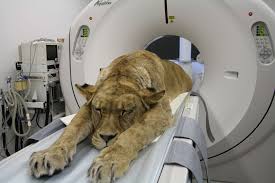

My colonoscopy was on a Monday.  On that Friday I had a CT scan.  The following Tuesday a nurse from the GI doctor called to schedule an appointment for me to talk to the doctor with the cheery and seemingly innocuous words, "He saw something on your CT that is going to change your treatment plan."  Immediately I started worrying.  I was at his office the next morning.  As I expected, the news was not good - two tumors on my liver and a spots on lymph nodes.  I walked out with another appointment - this one with my new oncologist.  The next day was Thanksgiving so I had to sit on this news a little bit longer.  I told my mom, and we agreed that I would talk to Sara after the holiday but before the end of the weekend so she would have time to process and talk to me.  We got back from my mom's on the Friday after Thanksgiving, and I talked to her that night.

This was without a doubt the most difficult conversation I've ever had with anyone.  I had run it through my head at least 1000 times in the past 10 days. And yet when I was sitting next to her the words just kind of tumbled out in random order.  I can't remember exactly how it went but I remember her reactions and some of my responses.  I told her that I had cancer and that I would be going through chemotherapy and surgery.  I explained that chemotherapy is a series of drugs that basically wage war inside your body.  The drugs are after the cancer but they hit other things too.  That internal war causes symptoms like nausea, hair loss, and tiredness.  I explained that I was going to feel pretty rough at times, but I didn't want cancer to steal our joy.  I assured her that she will still get to do her thing - drama, swim, Girl Scouts, friends.  And when I'm feeling good, we are going to do fun things again.  I would do my best to keep our life as normal as possible but there would be a lot of ups and downs. 

We talked about God and the role of faith in these hard times.  I explained that so much of this was out of our control and that we had to have faith in God that I am in good hands with my oncologist and my surgeon.  And I trust that God will meet our needs and be with us always.

Her next question was inevitable but felt like a punch in the stomach.  "Are you going to die?"  My answer was an rambling existential explanation of life and death that went something like this:  "We're all going to die.  That's part of life.  Am I going to die from cancer?  I don't think so.  I think with treatment and surgery, my chances are good.  I want to be here to see you graduate high school. And then college and everything else. I have a lot of reasons to fight and be strong."  She's crying.  I'm crying.  This is the first time I had really cried about this.  I was relieved to be able to get it out with Sara.  We talked a lot about our worries and fears and back to faith.  I wanted so much to promise her that everything was going to be fine but I didn't.  I don't want to give her false hope or promise things I have no control over.  I have always tried to be honest with her in a way she can understand. 

After we got hold of our emotions, Sara shifted into practical mode asking questions and giving me to do items.  "Who have you told? What do I tell my friends? I want to see Miss Cookie (her therapist). You need to tell my teacher."  We talked about sharing the news with our friends for a long time. Who to tell, when, how, what to say.  When you are an only child, your friends become almost like siblings, and those relationships take on greater significance.  Sara has a tight knit group of friends. She had definite ideas about who to tell and how to tell them. She made it clear this was her show.  I got the message, back off momma.

Telling her on Friday and having the weekend to process was the right decision. We spent the weekend hunkered down at home together. Sara turned down invitations because she wanted to be home with me. We put up the Christmas trees, enjoyed being together, and tried to have normalcy. By Monday we were rested, refreshed, and ready for the next steps.

Since our initial big talk we've had lots of little talks about it.  As expected her feelings have been all over the map - mad, sad, scared, and worried.  She gets frustrated that I can't do stuff I used to do like play in the snow.  The cold is hard on me because of the neuropathy in my fingers.  Getting milk out of the fridge causes my fingers to tingle a bit so snow sledding is out for now. I understand why she is mad and frustrated. Her life is different now and it isn't fair.  If I'm completely honest, it's bullshit. She's 9 and I'm 42.  I can't get mad because I know it doesn't help.  But that's me.  Sara can get mad. She's entitled to all of those feelings, and I make sure that she knows her feelings are valid and understood.  The anger and frustration doesn't happen often and it passes quickly.  Most often she is scared or worried.  She comes from a long line of worriers on her dad's side of the family.  She has a caregiver's heart and a thoughtful nature from that side too.  She's a great helper - emptying the dishwasher, sorting laundry, picking up the house.  She offers to get me water or snacks if I'm resting. There is a reason her dad nicknamed her "Little Sweetie". The beautiful thing about being 9 is the short attention span.  She gets emotional and then it's time to check her iPad, go to swim practice, play outside, or watch tv.  All in all I think she is coping very well - grades, behavior, and sleep are all good.  She talks about it openly not just with me but with her friends' moms, her grandparents, and family. She shares with her friends who are supportive and love her dearly.  She amazes me with her strength and ability to keep on rolling with whatever comes her way.  She is my motivation and inspiration. I hope that I am the same for her. 

Sunday, January 24, 2016

November 16 - The News

"You have a mass and it looks like cancer. We took a biopsy to be sure."

And with that the fog descended. The next few days and weeks would pass in a blur of doctors, waiting rooms, testing facilities, and questions. 

In October I was at my family doctor following up on my blood clots from the summer when I mentioned that I was still having digestive system issues.  He didn't think it was serious but he sent me to a GI specialist for a colonoscopy. My mom was with me on the Sunday before my appointment for my liquid diet.  We took Sara to school and headed to my appointment on Monday morning. The procedure itself isn't that big of a deal because you are asleep for it. Sitting in the waiting room and realizing you are the youngest person in the room by decades was kinda weird, but that was shades of what was to come.

It was my GI doctor who delivered the news after the procedure. I'm thankful that my mother was in the room when he explained everything.  My mother is level headed and practical, and she makes me laugh.  Between hearing the word cancer and the hunger from 36+ hours without solid food, my cognitive function was at its nadir. He said, "Things are going to happen pretty fast now." In my 42 years, I've learned that when a medical doctor says those words, they mean it. These are not people prone to hyperbole or soap opera type drama. Things did happen fast.  The nurse came in to set everything up and I was too dumbfounded to do anything but nod.  I walked out of the office with appointments with a surgeon, an endoscopy and ultrasound, and a CAT scan. Thus began a trend of trading one appointment for two or three more.

As we walked out of the office shell shocked, my mother said, "You need to think about what you are going to tell your Daddy." I nodded.  I said, "what am I going to tell Sara?"  The rest of the day my head was spinning with questions, things to do, plans to be made.  I knew right away that I wasn't ready to tell Sara.  Mom and I decided that she would deal best with facts so we would wait until we knew more before we told her.  It was also 10 days before Thanksgiving. I couldn't tell my friends yet.  I didn't have the words.  I was trying to act normal even though I was sleepwalking through my days and lying awake with my mind spinning at night.


Thursday, January 21, 2016

The Beginning

When this illness saga began, I said I wasn't going to post about it Facebook.  I'm kinda proud, independent, and private.  I think what I meant was, I'm just not ready to share with the world yet.  I wasn't even ready to share it with my closest friends.  It took me a bit to do that.  I'm writing now partly to share progress and to help me remember the details, but mostly, I'm writing as a way to really process what has happened and is happening to my body, my brain, and my life. I'm a thinker more than a feeler so my first reaction was practical not emotional.  I have feelings, but I need to think about them awhile to know what they are.  There have been a lot of thoughts and feelings to process. Things came at me so fast at first that I couldn't feel or even think too much.  I could only react and follow directions to the next appointment or test.
  
Two months ago, I went in for a colonoscopy and received news that I had colorectal cancer.  Since then I've had a MRI, a CT scan, a PET scan, an endoscopy and ultrasound, a port installed, three chemotherapy treatments, and countless appointments with either my GI doctor, my oncologist, or my surgeon.  In the midst of all that we celebrated Thanksgiving, Christmas, and New Years.  It's enough to make any sane person's head spin.  Luckily I was not entirely sane to start with.

After three chemotherapy treatments, I can say I'm tolerating it pretty well.  It is not easy or fun, but it is not beating me up too badly either. The nausea has been minimal to non-existent. I haven't lost my hair and probably won't with the chemo drugs I'm taking. My symptoms range from the normal fatigue and low energy to the annoying cold sensitivity in my fingers and in my mouth.  I wear gloves everywhere because my fingers tingle.  Because I can't tolerate cold drinks, I drink room temperature Coca-Cola which is an abomination to this Georgia girl.  

Mentally, I'm feeling pretty optimistic about my treatment and the prognosis.  I am relatively young, and aside from having cancer, I'm in great health. From a faith perspective, I know that God is with me and will stay with me.  I know that he has put people in my life who have and will help and encourage me as I go through this.  I know my needs will be met, and I believe that healing is possible.  My job is to keep moving forward and have faith.

I'm catching up on my chronology of events, processing as I go.  I will be writing more in the coming weeks about how things have unfolded and the details of my illness.  I'll cover the serious to the silly. Being able to laugh at the absurdity of it lifts the weight and has gotten me through some rough times. There are also some serious topics like conversations with Sara and the trials and tribulations of walking a 9-year old through an illness.  By the way, Sara is faring well all things considered.  She's resilient and yet pensive.  She's also 9 years old and pretty into her own stuff too.  Like me, she is surrounded by great people who help and encourage her. 

The most surprising thing to come out of the past two months is the outpouring of love and support from expected and unexpected sources.  I'm surrounded by loving and supportive people from the closest friends to mere acquaintances.  People have been so kind and so generous.  I have to admit that it kind of rocks my inner cynical core a bit, and that isn't a bad thing. Sara and I are both so loved and so blessed.